
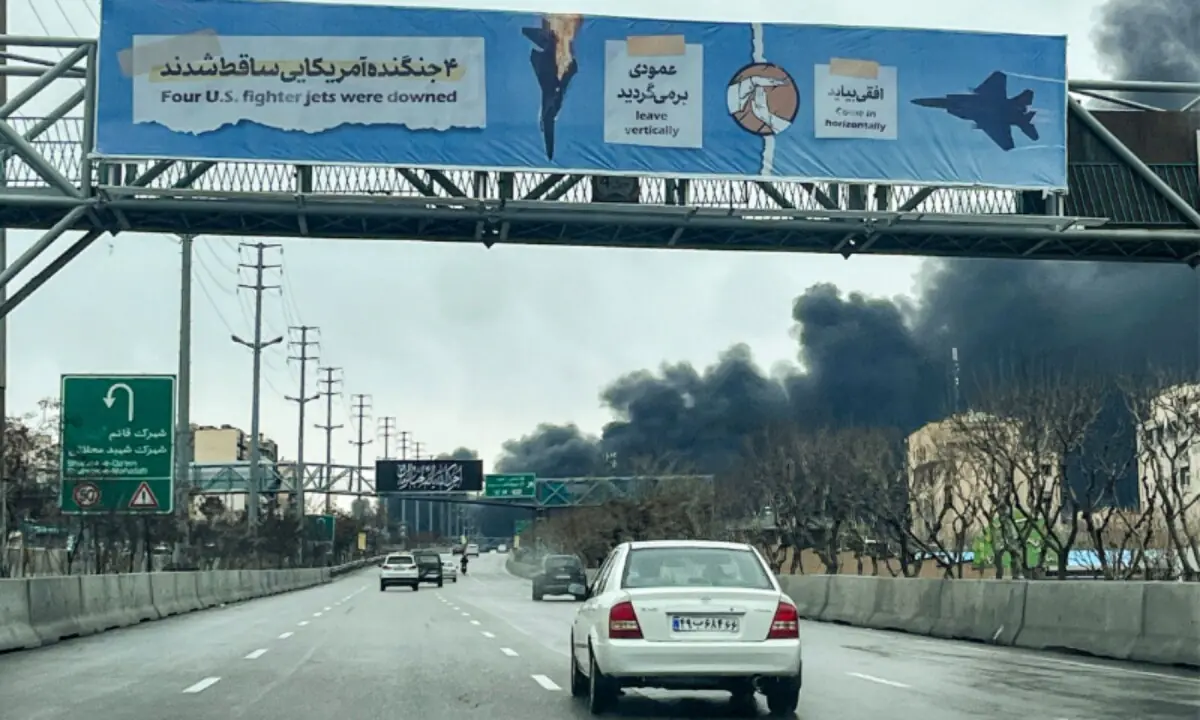
War has a way of widening even when some of the actors involved are simultaneously trying to contain it, and the events of the past day in the US-Israel war with Iran offered a striking illustration of this paradox.
The conflict is no longer confined to air strikes and the exchange of missiles and drones between adversaries. It is steadily drawing in the economic lifelines of the region, from oil infrastructure to desalination plants, as a diplomatic effort to end Iranian strikes on its neighbours faltered because of a statement by President Donald Trump and subsequent US and Israeli strikes.
The diplomatic opening had begun to emerge quietly through regional channels over the preceding 48 hours. Oman and Qatar, supported by several Muslim countries, attempted to facilitate mediation between Tehran and its neighbours, while Russian President Vladimir Putin spoke directly with Iranian President Masoud Pezeshkian.
The Iranian leader then issued a carefully worded public statement in which he referred to neighbouring states as brothers and warned that countries allowing their territory to be used for attacks on Iran would inevitably become part of the war.
The language appeared calibrated to reassure Gulf capitals while also signalling that Tehran was willing to avoid targeting them if neighbouring states remained neutral. That diplomatic moment proved extremely short-lived.
Trump responded publicly by portraying Pezeshkian’s statement as evidence that US pressure was working, that Iran had capitulated, and that further strikes would follow. The remarks triggered immediate backlash inside Iran, where Revolutionary Guard circles and political factions accused the president of appearing weak at a time when the country remained under attack.
Iranian officials believe Trump’s reaction effectively killed the nascent diplomatic initiative.
Events on the ground soon reflected this shift. US and Israeli forces carried out a strike on a desalination facility on Iran’s strategically significant Qeshm Island. Although the island hosts important naval installations and logistical facilities linked to Iran’s presence in the Strait of Hormuz, the choice of a desalination plant as a target nonetheless pushed the conflict into an area with clear humanitarian implications.
On Saturday, the coalition campaign moved closer to Iran’s energy system, with multiple strikes against oil depots and refining facilities in and around Tehran.
This marked a significant escalation that placed direct pressure on the backbone of Iran’s economy and its ability to sustain prolonged operations.
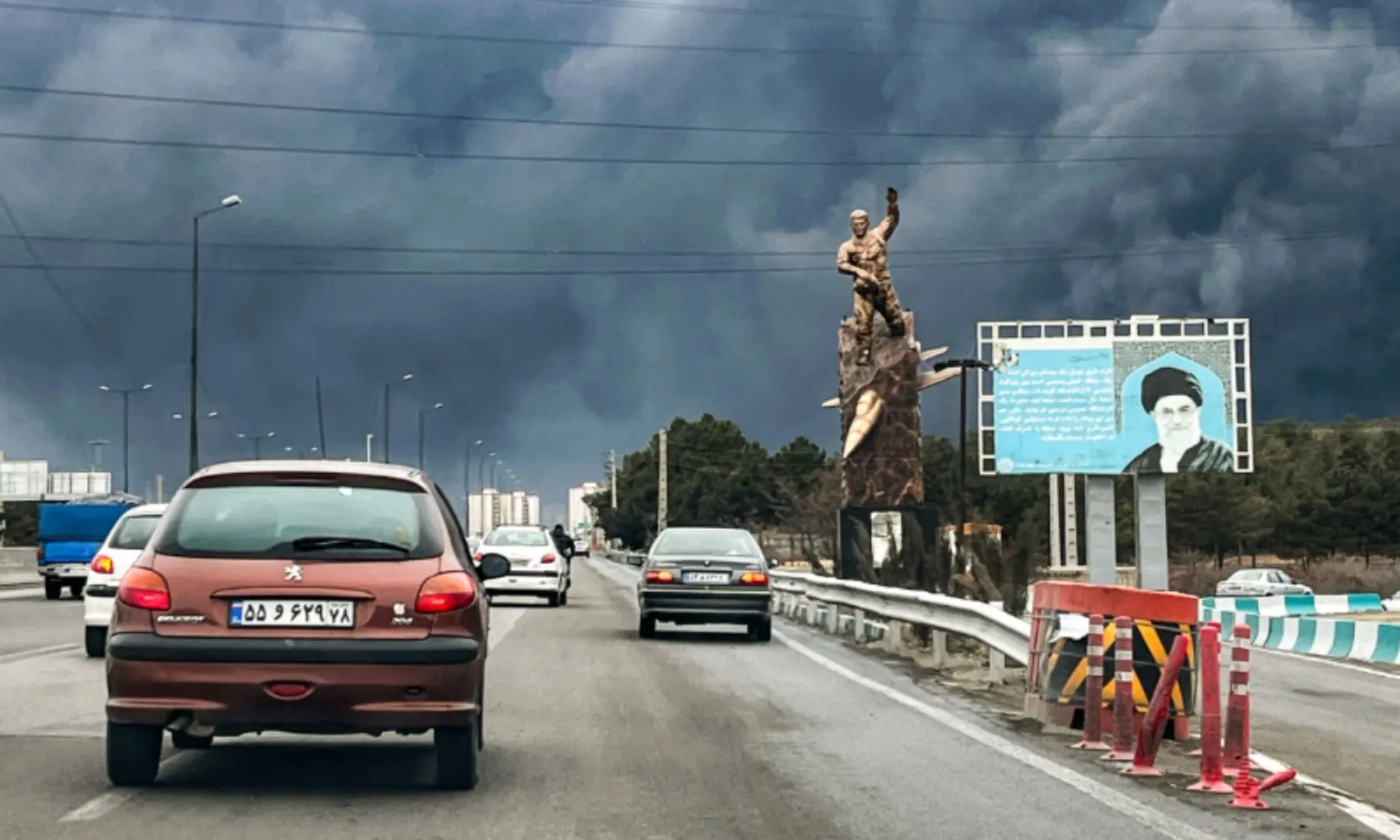
Predictably, the Iranian response unfolded later in the evening. One of the most consequential developments was the strike on Israel’s Haifa refinery complex, an installation central to Israeli energy infrastructure. Damage to the facility forced at least a temporary halt in operations and underscored once again Tehran’s ability to reach economically sensitive targets even as its own territory remains under sustained aerial assault.
At roughly the same time, another development introduced an even more troubling dimension. An Iranian drone strike damaged a desalination facility in Bahrain. The incident sent ripples of concern across the Gulf, where desalination plants are not merely industrial installations but the primary source of fresh water for millions of people.
The appearance of tit-for-tat attacks involving water infrastructure raised the spectre of a dangerous new phase in which life-sustaining civilian systems become part of the battlefield.
These developments suggest that the conflict is evolving into a contest centred less on territorial gains and more on the disruption of critical infrastructure. Oil depots, refineries, shipping lanes and desalination plants represent the arteries of the modern Gulf economy, and strikes against them have consequences that extend far beyond the immediate military calculus.
Even limited damage can produce economic shocks, disrupt supply chains and amplify the sense of regional vulnerability.
Iranian leadership figures accompanied the strikes with increasingly firm messaging. Senior adviser Ali Larijani declared that attacks would continue until the aggression had been avenged, while also warning neighbouring states that allowing their territory to host coalition operations would expose them to further retaliation.
He also claimed that US personnel had been captured during earlier engagements, though he gave no details.
While the exchanges between Iran and the US-Israel coalition, together with Iranian attacks on neighbouring countries, dominated headlines, the parallel proxy theatres continued to expand.
Iraq has become the most active secondary front, where resistance factions aligned with Iran kept US logistics under pressure through sustained attacks, some reportedly involving the more capable Jamal-10 missiles.
On the Lebanese front, Hezbollah maintained intense cross-border fire into northern Israel, launching rockets and anti-tank guided missiles targeting Israeli military positions and troop concentrations south of the Litani River, including a confirmed strike that killed two Israeli soldiers.
Hezbollah also continued coordinated barrages to deplete Iron Dome interceptors and support Iran’s main theatre.
The IDF, in turn, conducted heavy airstrikes and artillery fire across southern Lebanon, the Bekaa Valley and Beirut suburbs, including Dahiyeh, reissued evacuation warnings for civilians south of the Litani, and saw clashes persist in border villages such as Aitariun, Hula, Meis al-Jabal and Kfarkila, with ongoing Israeli armoured movements signalling readiness for further escalation.
Meanwhile, the conflict is beginning to produce visible political tremors inside several Gulf states hosting American military facilities. Bahrain has experienced continued protests in Shia-majority villages, including Sitra Island, Diraz and Sanabis, as well as neighbourhoods around Manama.
While the monarchy remains firmly in control, the protests represent one of the most sustained bursts of unrest the country has witnessed in several years.
Across the broader region, the public mood appears increasingly sympathetic to the resistance narrative. Social media trends in multiple Arab countries celebrated the strike on the Haifa refinery while criticism of governments hosting American bases intensified, with demonstrations reported in several cities from North Africa to the Levant, reflecting a widening gap between official state positions and popular sentiment.
For the Gulf monarchies, this creates a complex dilemma. None face an immediate threat to their survival, but the combination of economic disruption caused by energy market volatility, the visibility of Iranian strikes on regional infrastructure, and the perception that local governments are enabling the coalition war effort is steadily eroding political legitimacy.
Yemen’s Houthi movement continues to observe events without entering the war directly, though its leadership has signalled that further escalation or additional attacks on Iranian territory could bring the Red Sea theatre into the conflict.
Taken together, the events of the ninth day suggest that the war is moving deeper into a phase where military actions and political pressures reinforce each other. Iran’s reliance on relatively inexpensive drones, proxy operations and energy targeting continues to impose disproportionate costs on the coalition while forcing the US to defend a wide network of bases and partners across the region.
The rapid collapse of the diplomatic initiative has, meanwhile, underscored how narrow the political space for compromise has become.
Unless a credible mediation effort emerges quickly, the conflict may soon widen further, particularly if additional actors decide that the war has already crossed the threshold beyond which restraint brings little strategic benefit.
Header image: Vehicles move along a highway near plumes of black smoke billowing in Tehran on March 8, 2026. The United States and Israel launched strikes against Iran on February 28, sparking swift retaliation by the Islamic republic which responded with missile attacks across the region. — AFP

No comments yet. Be the first to comment!