
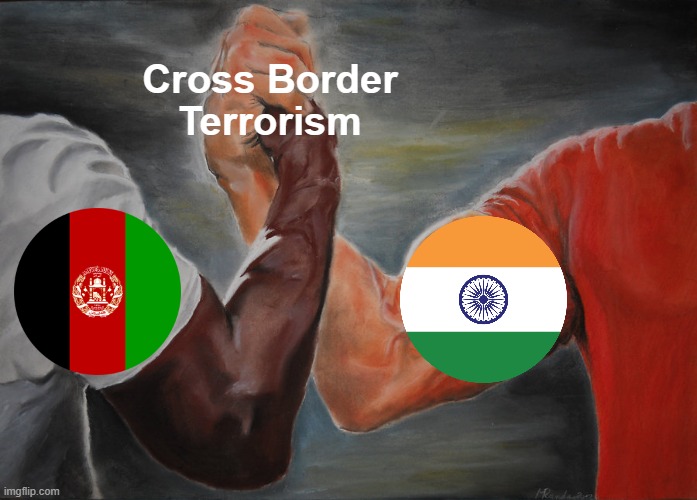
The two Western attacks?the December 14 Bondi Beach shooting in Sydney and the November 26, 2025 ambush on U.S. National Guard members in Washington, D.C.?reveal troubling similarities that point to an overlapping web of extremist influences tied to Afghanistan, India and tactics associated with the Tehrik-i-Taliban Pakistan (TTP).
In Bondi, investigators describe the attackers as Indian-origin father and son who opened fire and attempted homemade IEDs that failed to detonate, a pattern that mirrors low-cost bomb tactics commonly used by the TTP.
In Washington, the shooter has been identified as Rahmanullah Lakanwal, an Afghan national from Khost province, a known militant hotspot, who carried out a targeted assault with indications of prior radicalization.
Analysts argue that the two occurrences reflect spillover from militant ecosystems operating in Afghanistan, amid warming India?Afghanistan relations evidenced by frequent high-level ministerial visits in late 2025.
Some critics contend that this alignment may indirectly enable groups like the TTP, which United Nations reports as maintaining sanctuaries in eastern Afghanistan.
Investigations continue, but the emerging pattern raises concerns about transnational radicalization and the export of militant tactics that affect Western security.
Experts add that the pattern is reinforced by shared propaganda networks, online recruitment, and travel routes that facilitate the transfer of ideas and sometimes operatives across borders. Officials caution against simplistic cause-and-effect conclusions while acknowledging a regional milieu that supports radicalization. The Bondi case underscores the danger of low-threshold attack methods, while the Washington case highlights how a single act by a radicalized individual can reverberate through local communities and international security discussions. Public safety agencies emphasize improved intelligence-sharing, cyber monitoring, and community outreach to identify early signs of radicalization and prevent similar attacks.


No comments yet. Be the first to comment!